News and updates from Paul and Cathy Middleton, serving in southern Africa.

21 February 2017

Breath of Life in the Switzerland of Africa


In February, Mercy Air had the privilege of partnering with The Ohio State University when they travelled to Swaziland to provide training in Neonatal Survival. Our friends Roger and Katy Pacholka (In His Name Ministries and partners of Mercy Air) have had many years of involvement with one of the major hospitals in Swaziland and offered assistance in helping to reduce the infant mortality rate by providing training.

The Swazi Department of Health embraced the idea and a group of neonatal nurse practitioners, a neo-natologist and nurse midwives from The Ohio State University ran a course for three weeks on ‘Helping Babies Breath’ and Neonatal survival. Cathy was privileged to be part of the team as a nurse/midwife.
The course had 21 participants and included nurses, midwives, doctors and pediatricians from six hospitals in Swaziland.
It included theoretical class room sessions and practical training on manikins, learning the skill of using the bag valve mask.

Students were taught how to give babies ventilation and assess the heart rate working together as a team.

A lot of concentration and co-ordination was required!

Some interesting fun role play simulating a delivery (even the guys had a go at giving birth) and care of the baby immediately after birth.
Women come from villages far away up to a month before their due date and wait in this expectant mother's house. It's very basic but beats having your baby along the road or in a taxi.
Women in early labour wait outside the labour ward and are left to cope with their pain alone.
In the labour and delivery room there is very little privacy and the mothers labour without support from their relatives.
After all the hard work this lady was very tired but grateful to have a beautiful, healthy baby boy.
After the delivery the babies are brought to another room where they are given further resuscitation if needed. Our students assessed them and used their new skills.
There is a high HIV positive rate amongst the population of Swaziland but prevention of mother to child transmission (PMCT) is helping to reduce this. Babies born to HIV positive mothers are started on ARV's immediately after birth.
Babies were given a full examination by our students to detect any abnormalities.

Our students did a Ballard Test to determine the gestational age of the babies, a useful tool as many of the women are unsure of their due date.

Rubbing a baby to stimulate it.
 
Some babies required oxygen after delivery to help their transition into life outside the womb.
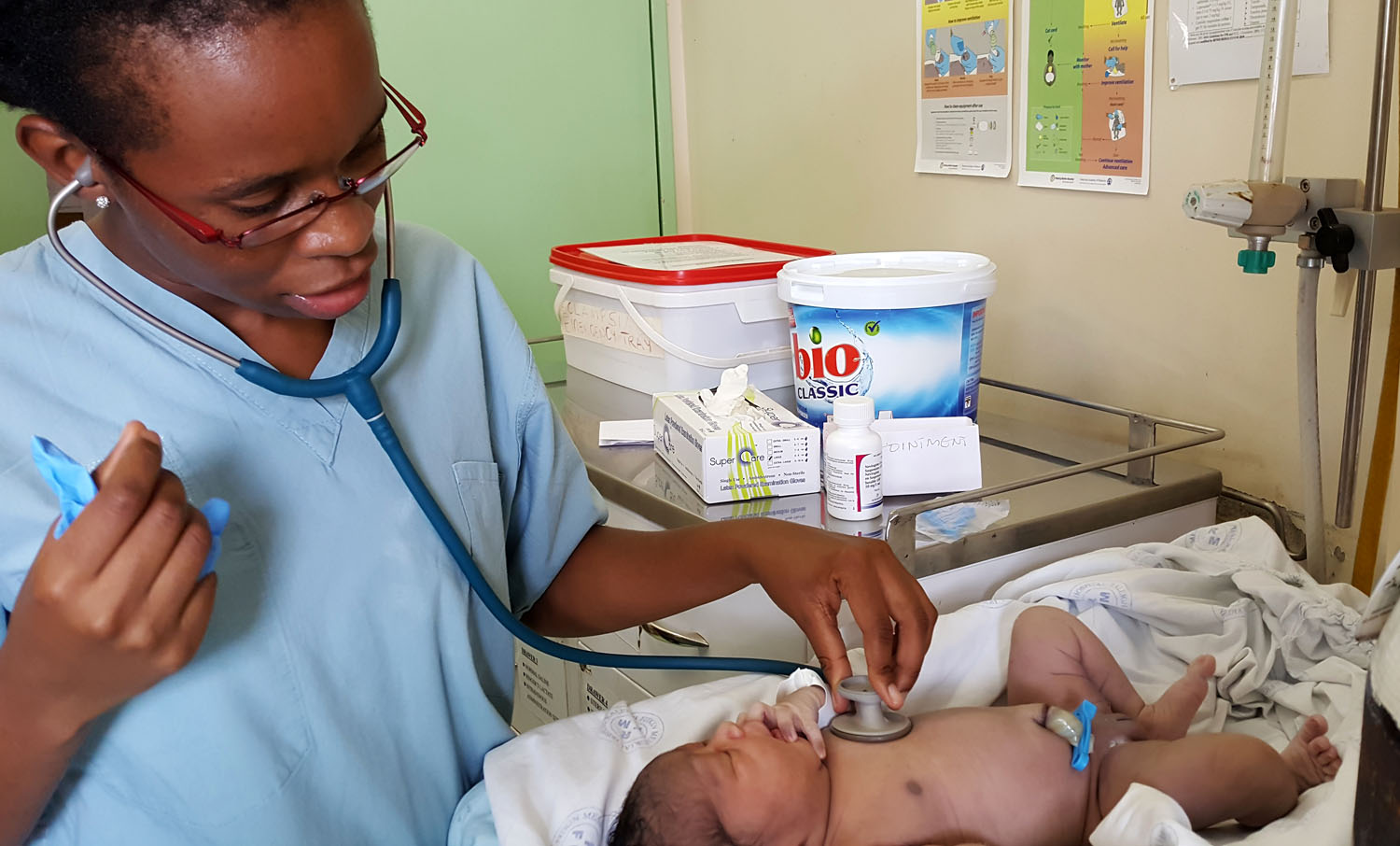
Examination of the babies after delivery is part of the training, here the student is listening to the heart to detect any murmurs.
Dr. Louis, a neo-natologist worked in the special care baby unit giving support and advice.

This tiny baby girl weighed in at only 900 grams, after being assessed we found that she was 31 weeks old.
Here she is after a couple of days, doing well and enjoying some skin to skin contact with mummy. Kangaroo care is frequently used for these premature babies.
An interesting case was of a mother, Futhi, who was in labour for most of the day and failed to progress so was transferred to theater for cesarean section. She was very afraid that her baby might die.
Skilled doctors delivered this strapping boy by cesarean section.

Our students together with instructors were present at the birth and provided resuscitation of a  baby boy.
He weighed in at 4.7 kg (10.34 lbs)!
Our students did a great job of keeping him warm, stimulating him and clearing his airways. He thanked them with a vigorous cry.
Cathy with the baby a day after his birth.
A very relieved, happy mummy and baby!
A baby abandoned whilst the team was at the hospital also gets care.
These lovely ladies (some of our students) are getting ready for graduation.
Thank you.

Cathy.

25 January 2017

Long Legs and Intelligence - Every blokes dream.

The Kodiak is a very capable aircraft in many aspects especially in terms of load and range. Perhaps we can just tell you of two things that have impressed us as we have now been operating it for over three years.

A recent picture of the display in the Kodiak shows two green circles or range rings which equate to where we can get to with the fuel load we have on board - dotted line is with 45 mins fuel left and the solid line indicates maximum range.
North is up to the top right and Cape Town is to the left. We had already flown about an hour when the photo was taken but you can see we still had enough to reach just about anywhere in southern Africa with a range at this point for almost another 1000nm. You will also notice that we had just over 3/4 tanks and a slight quartering head wind at the time.

The Garmin 1000 is really quite clever and works out the wind speed and direction and takes that into account when displaying the range. A strong wind would give you quite an oval green 'circle' as in the pic below.
This above flight was helped by a hefty 32kt tail wind and helped us work out that we didn't need to stop in Pretoria (WB) for fuel as we could make it easily to Nelspruit (FAKN) and could even continue to Maputo, Mozambique if we wanted without going into our reserves. Without knowing the wind and the range it might have been a different call and would have cost us time and money for landing fees etc as well as another cycle on the engine.
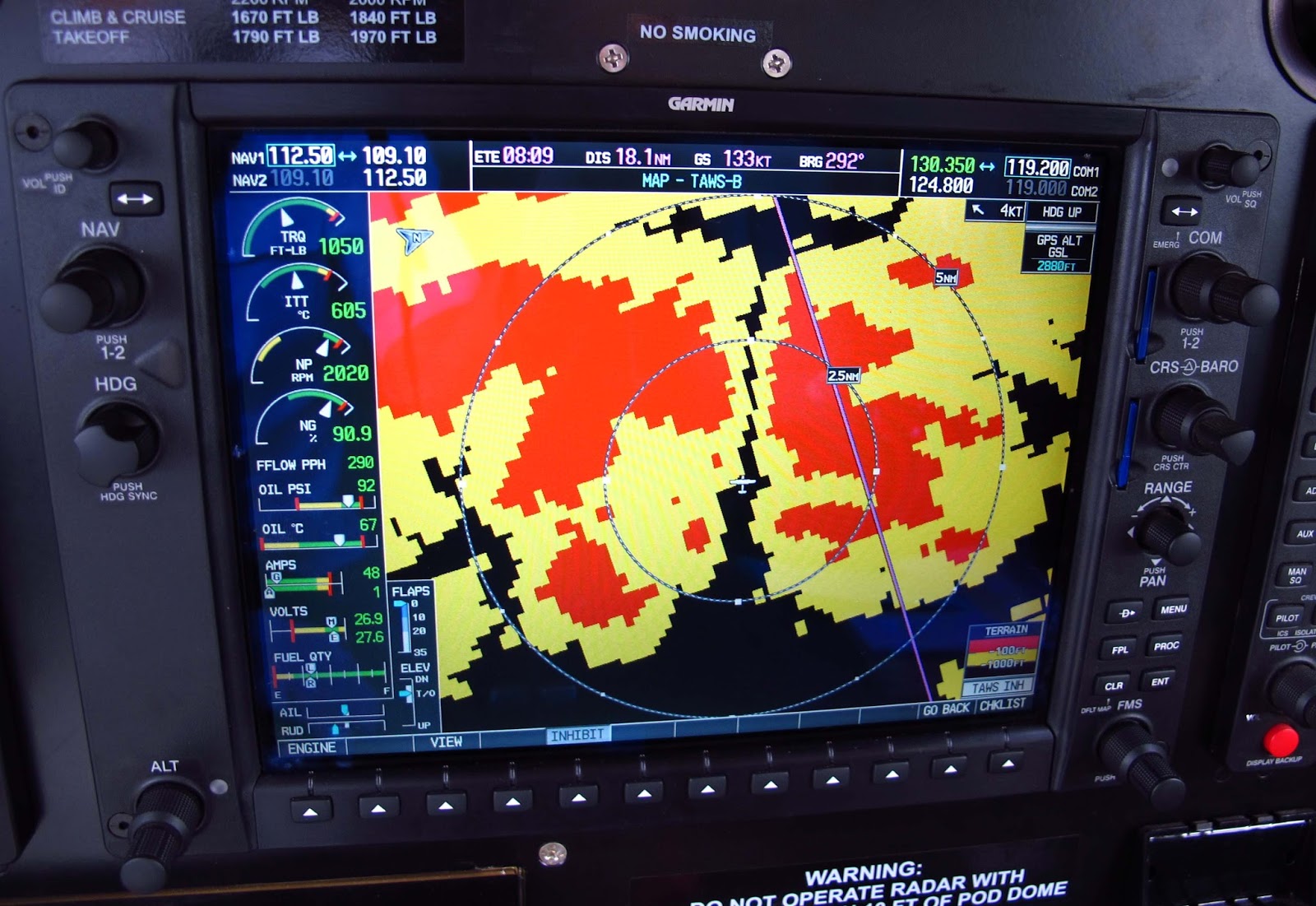
Another clever thing the Garmin does is give you terrain awareness. The middle screen in the cockpit has a map showing you where the hills are. Red is within 100ft, yellow between 100ft and 1000ft and black is far enough away it shouldn't be an immediate problem.

The pic below shows we are in a valley that opens out 4nm ahead.
The synthetic vision on the main screen also shows this...
How handy is that!
.. and a glance out of the window proves it all the be very true.
There's a stack of other clever things it does but before anyone asks, no, it does not make coffee and no, you can't get satellite TV on it - there are limits!
General cockpit view
So why a blog post about this - it's not a trip report about how we have helped some people in a far off country or even an impassioned plea for funding for a worthwhile cause?

It's really a thank you to those many people who in some way, large or small, helped Mercy Air obtain the Kodiak in the first place. Because with it, we can now not only do what we were doing before - and more, but we can do it more efficiently and with a greater margin of safety.
Thank you.

Paul and Cathy

08 December 2016

Sight Flight KZN

Following a 'vision trip' a few months ago, early December saw the first joint flight to northern Kwa-Zulu Natal between Mercy Air, Mission Aviation Fellowship/Flying for Life and Wilderness safaris who own Rocktail Camp where we were based.

Wilderness Safaris were keen to look after their staff and the communities they come from and knew MAF were doing similar work up in Limpopo (see previous blog entry) which Mercy Air was already involved with.

For this trip Cathy and I flew two optometrists to Manzengwenya in northern KZN armed with all their eye testing equipment and about 300 pairs of donated spectacles of varying prescriptions.

The flight was only an hour long but it would have been nearer nine by road.
Some of the many donated spectacles we took with us.
The obligatory 'on the way there' photo. Wim in the front with me and Cathy and Bonita in business class just behind.
Manzengwenya is an interesting strip in that it's cut out of a forest and is surrounded by tall trees. It's a bit like landing in a shoe box. It is just over 2km from the coast.
Final approach 21.
The 310 parked and unloaded. A surprisingly small amount of cargo for the large amount of difference it was about to make in people's lives.
After lunch we saw most of the lodge staff.

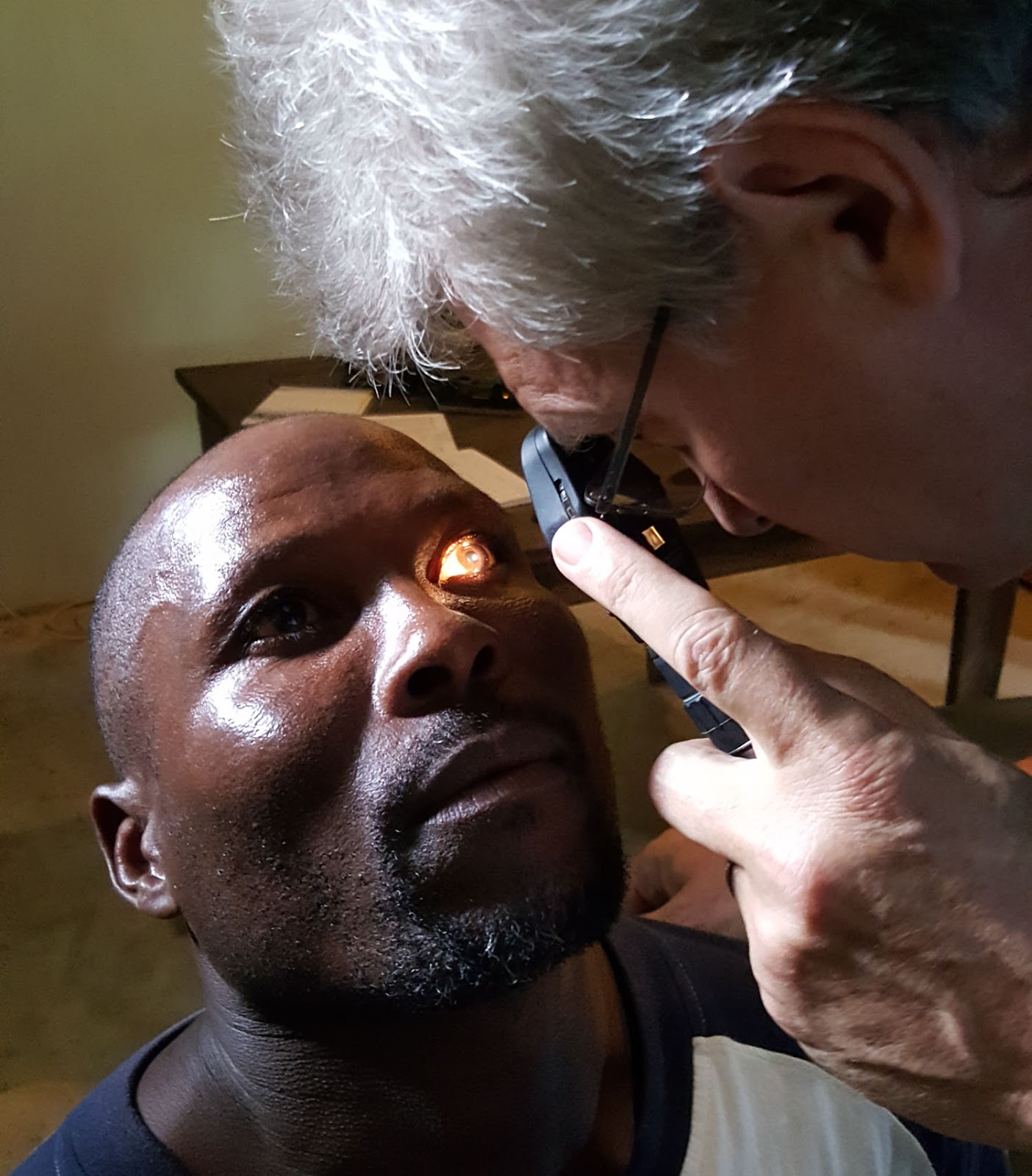
There was even time for me to get a quick check up.

Some of the tools of the trade.
In the evening before dinner we had time for a walk on the beach.

Last week we had to share our accommodation with a scorpion. This week's guest was a slightly less scary but none the less impressive Long Horned Beetle.
There was also a rather large moth that was fluttering around (that I didn't get a photo of) but with a wingspan of almost 15cm . We overheard a French lady remark/question "it eez a bat?"

The next morning we drove along some sandy roads into the community...
..where people were already waiting for us (most were actually inside in the shade).
All the fancy equipment was set up again...
..and Wim and Bonita began testing.


There were many people lined up and excited about the renewed gift of clear sight and we were there well into the afternoon.
Most people were in their 50's, 60's and even 70's. The oldest man to arrive was 89.
At the other end of the scale there were a few kids under 10.


  We had a couple of translators to help us with those who didn't speak English so well.
 
During all this time, mine and Cathy's job was to record names, ages and prescriptions and actually distribute the spectacles to those who had been tested.
Cathy and I both found the work very interesting and we had many questions. Wim and Bonita were very good and took time to explain things and let us have a look ourselves.

One of the big perks of the trip was seeing the reaction and joy of so many for whom the world instantly became a more clear and vivid place.

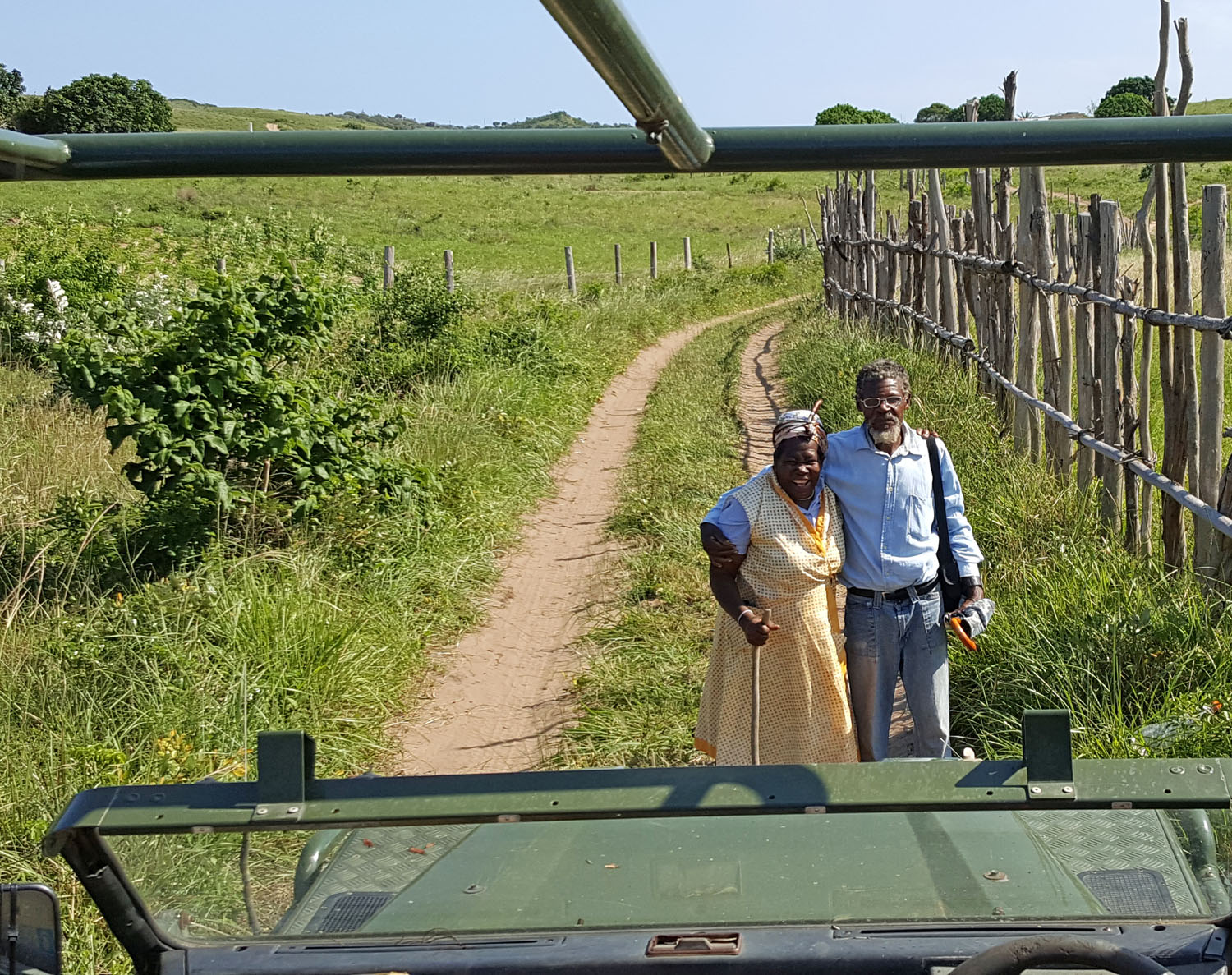
One particular old gentleman was shouting and proclaiming, "so clear - so colourful" all the way back home when we gave him a lift afterwards.
The next morning there was just one more person to see before we loaded the plane and set off again for White River.
In total almost 100 people benefited from the visit, some seeing the world in a new light for the first time in a long time.

Thank you

Paul and Cathy